
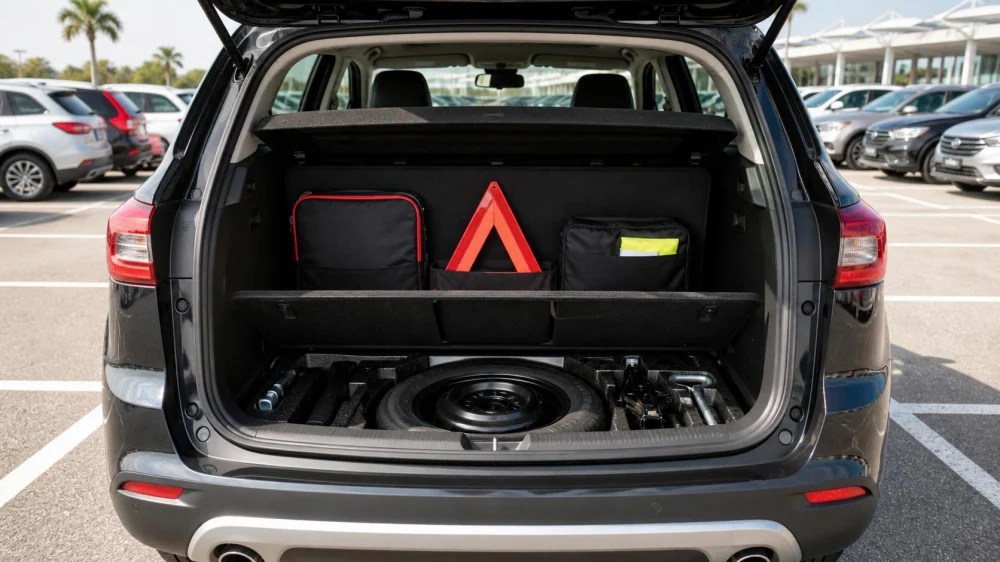
Rental Car Roadside Kit: Locate the Spare, Tools, and Assistance Number
On this page
Quick answer
Before leaving the rental lot, learn what roadside equipment the vehicle actually carries and what the contract allows you to use. Check for a spare or mobility kit, jack, lug tool, wheel-lock key, warning device, inflator, charging adapter, and the rental company's assistance number. Photograph the sealed kit and storage area without opening tamper packaging. If a tire or mechanical problem occurs, move to safety, call the provider, and follow instructions before attempting repair or authorizing a tow.

Why it matters
Many modern vehicles lack a conventional spare, and equipment differs by trim. Using a sealant, jack, or third-party tow without permission may create safety, damage, or contract issues.
This United States rental guide is general. Vehicle equipment, roadside coverage, road rules, cellular service, tire design, weather, disability needs, and contract terms vary.
Avis Car Rental
CatonsvilleBaltimore CountyMaryland
adjacent to Ashley Furniture, 6610 Baltimore National Pike, Catonsville, MD 21228, USA
Practical checklist
- Find the official roadside assistance and emergency numbers.
- Identify spare tire, inflator or sealant kit, jack, tools, wheel-lock key, and warning device.
- Check seals, expiration dates where visible, damage, and missing pieces.
- Ask whether the vehicle has run-flat tires or special towing requirements.
- Confirm roadside coverage, exclusions, fees, and approved providers.
- Save the agreement, vehicle number, pickup location, and license plate securely.
- Plan offline contacts for low-signal routes.
Step-by-step plan
- Park safely at pickup and inspect the cargo and underfloor storage with staff permission.
- Ask a representative to explain missing or unfamiliar equipment and note it on the agreement.
- Photograph the kit in place, including any intact seals, without dismantling components.
- Store luggage so emergency equipment remains accessible and cargo stays secured.
- If trouble occurs, leave traffic lanes when the vehicle can move safely and activate hazard warnings.
- Call emergency services for immediate danger, then contact rental roadside assistance before repair or towing.
- Keep receipts, incident numbers, photos, and the return-location instructions.
Save pickup photos, equipment inventory, sealed-kit condition, contract and coverage, assistance number, incident time and location, dashboard warnings, calls, provider authorization, tow or repair details, receipts, and return inspection.
Limits and warning signs
Possessing a jack does not mean roadside tire changing is safe or permitted. Mobility sealant may not repair sidewall damage and can affect tire-pressure sensors or later service.
Use emergency services for crashes, injuries, fire, hazardous traffic, or an unsafe location. Call the rental provider for missing equipment, warning lights, tire damage, breakdown, authorized towing, and vehicle exchange.
Frequently asked questions
Do all rental cars have spare tires?
No. Some have inflators, sealant, run-flat tires, or roadside-only plans; verify the actual vehicle.
Can I open a sealed tire kit to inspect it?
Ask staff first and photograph the seal; opening it may create a charge or make it unusable.
Should I change a flat myself?
Only if safe, authorized, equipped, and within your ability; calling the rental provider is often the first step.
What if cell service is poor?
Save numbers and contract details offline and share the route with someone before travel.
Sources and evidence
The guide applies roadside scene safety, vehicle-equipment inventory, contract authorization, lifting and tire hazards, towing, and documentation principles: inspect at pickup, preserve seals, keep access clear, and call the provider before action.
Conclusion and next steps
Locate and photograph the actual kit, save assistance contacts offline, confirm coverage and restrictions, and keep equipment accessible. During a breakdown, prioritize scene safety and obtain rental-company authorization.




 Avis Car Rental3.0 (217 reviews)
 Alamo Rent A Car4.0 (76 reviews)
 Enterprise Rent-A-Car4.0 (130 reviews)
 UPE Joyrydez - 24/7 Rentalz4.0 (64 reviews)
 Budget Car Rental3.0 (261 reviews)
 NY Rent A Car3.0 (52 reviews)
 Why More Travelers Choose Hybrid Vehicles for U.S. Road Trips
 How to Find Cheap Car Rentals in Baltimore Washington Airport
 Rental Car Toll Options: A Pre-Drive Decision Guide
 How to Know If a Rental Car Company’s “Unlimited Mileage” Really Means It
 Car Rental Tips for Booking During New Year’s Travel Season
 Best Minivan Rentals for Family Road Trips in America