
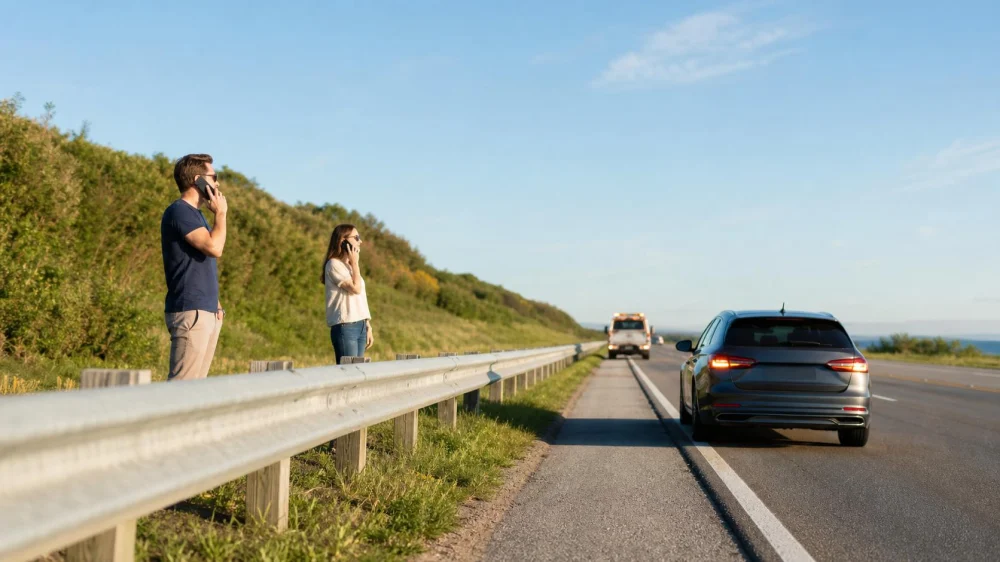
Rental Car Breakdown: Stop Safely and Follow Procedure
If a rental car loses power, displays a serious warning, overheats, vibrates, or becomes unsafe to control, prioritize people over the vehicle. Signal and move to a safer location only when the car can be driven safely; otherwise stop as safely as circumstances allow. Call emergency services for a collision, injury, fire, dangerous road position, or immediate threat. Then contact the rental company's official roadside channel, follow its instructions, and do not authorize repairs or towing on your own unless the agreement permits it.
In this guide
Recognize a Reason to Stop
Stop and seek guidance for smoke, fire, loss of steering or braking, a severe tire problem, rapidly rising temperature, strong fuel odor, repeated stalling, major vibration, or a critical warning. Dashboard symbols vary by vehicle; do not guess from color alone when safe operation is uncertain.
A minor convenience issue may allow travel to a well-lit location, but only the vehicle manual, rental company, roadside professional, or emergency responder can guide the specific situation. Never continue merely to protect a schedule.

Healthy Moves
Brick TownshipOcean CountyNew Jersey
503 Brick Blvd Suite 105, Brick Township, NJ 08723, USA
Position the Vehicle Safely
Use signals and hazards as appropriate, reduce speed smoothly, and move away from active traffic when the car remains controllable. Choose a level, visible area if available. Do not cross lanes abruptly, stop in a blind curve, or attempt to reach an exit when the vehicle cannot do so safely.
Once stopped, set the parking brake and follow local safety rules. Whether occupants should remain belted inside or exit behind a barrier depends on traffic, fire, weather, and official guidance. Do not stand between vehicles or beside moving traffic. Keep children and pets under close control.

Know When to Call Emergency Services
Call emergency services for injury, collision, fire, smoke, a fuel leak, suspected carbon monoxide exposure, a vehicle stranded in a dangerous lane, or another immediate threat. Give the road, direction of travel, nearest marker, vehicle description, and hazards.
Emergency responders manage danger and traffic; they may not handle the rental contract. Follow their directions first, then inform the rental company. Do not remain near a burning vehicle to make a roadside call or retrieve luggage.
Contact Official Roadside Support
Use the number in the agreement, rental app, key tag, or official company site. Avoid sponsored search results that may route to an unrelated provider. Confirm the rental company's legal name, vehicle identifier, your location, callback number, and the problem you observed.
Describe facts: the warning shown, sound, smell, loss of function, and when it began. Do not diagnose the cause. Ask for a case number, provider name, estimated arrival, safe waiting instructions, and the plan if help does not arrive.
Document Facts Without Taking Risks
When safe, photograph the vehicle position, dashboard warning, visible condition, fuel or charge level, mileage, and surrounding signs. Record the time, weather, calls, case number, and instructions. Do not step into traffic, open a hot cooling system, touch leaking fluid, or crawl beneath the vehicle.
Keep screenshots and messages. If the vehicle must be moved immediately by authorities, document their agency and destination without delaying compliance.
Confirm Towing and Repair Authority
Ask the rental company to identify the authorized tow provider and destination. Verify the arriving truck before releasing the vehicle and remove personal belongings when safe. Never ride in a location not designed for passengers.
Do not approve a tire, battery, mechanical, body, or glass repair unless the agreement or rental company gives clear authority. An unauthorized repair may be unsafe, incompatible, or not reimbursed. Keep every receipt for an approved expense.
Arrange a Replacement or Trip Change
Confirm whether a replacement will be delivered, collected at another branch, or issued after towing. Ask about transportation for passengers, luggage, child seats, and accessibility equipment. Verify the new contract, fuel level, vehicle class, charges, and return location.
If no replacement is available, ask for written next steps and the process for reasonable documented expenses. Coverage is not guaranteed; card benefits, travel insurance, rental protection, and personal auto policies have different exclusions and claim rules.
Preserve Records for Charges and Claims
Keep the original agreement, pickup condition record, roadside case, photos, tow details, replacement documents, receipts, and final invoice. Ask for written confirmation of when your responsibility for the disabled vehicle ended.
Review later charges for towing, roadside service, fuel, damage, downtime, or administrative fees against the agreement and facts. Raise discrepancies promptly through the company's documented dispute process and contact insurers or card-benefit administrators within their deadlines.
- Immediate danger handled through emergency services
- Vehicle stopped without unnecessary maneuvering
- Occupants kept away from traffic and hazards
- Official rental roadside channel contacted
- Case number and instructions recorded
- No unauthorized diagnosis, repair, or tow approved
- Replacement terms and passenger needs confirmed
- Photos, receipts, and final charges retained
Frequently Asked Questions
Should I call the rental company or 911 first?
Call emergency services first when people or traffic face immediate danger. Contact the rental company after the scene is safe or have another person call.
Can I change a flat tire myself?
Follow the agreement and roadside instructions. Roadside location, equipment, vehicle design, and coverage vary; never attempt work beside traffic or when you lack safe conditions and training.
Who pays for towing?
Responsibility depends on cause, contract, protection, and authorization. Ask before the tow and preserve documents, but do not delay an authority-ordered move from a dangerous location.
What if my phone has no signal?
Seek a safe call point, roadside emergency phone, nearby staffed business, or help from authorities. Do not walk along a high-speed road unless officials direct it.
Can I leave the car?
Get rental-company or official instructions when possible. If safety requires leaving, secure it only if feasible, take essential personal items, record the location, and notify the company promptly.
A breakdown plan is a safety sequence: control the vehicle, protect occupants, summon emergency help when needed, and use authorized rental support. Road laws, contracts, coverage, vehicle technology, and conditions vary; follow official instructions for the actual event.




 Enterprise Rent-A-Car4.0 (303 reviews)
 NextCar3.0 (109 reviews)
 Avis Car Rental3.0 (63 reviews)
 Enterprise Rent-A-Car4.0 (519 reviews)
 Ride Proximity Rent-A-Car (Tesla, Vanderhall, Slingshot, BMW, MINI)5.0 (30 reviews)
 Blue 8 car rental0.0 (0 reviews)
 Understanding Hidden Car Rental Fees: How to Spot and Avoid Unexpected Charges Before They Hit Your Wallet
 Last-Minute Car Rental Deals: How to Save Money When Booking Today
 Rental Car Return Receipt: Check Time, Fuel, and Charges
 How to Use Coupon Codes, Referral Deals & Promo Rates When Renting a Car
 How to Read Your Car Rental Receipt and Spot Hidden Fees
 Why Customer Reviews Matter More Than Price When Choosing a Rental Car