
Rental Car Fuel Type Check: Prevent Misfueling
On this page
Quick answer
Confirm a U.S. rental car’s fuel before the first stop by checking the fuel-door label, fuel cap, owner information, and rental company instructions. Match the pump label exactly; never choose by nozzle color alone. If the wrong fuel enters the tank, stop fueling, do not start the engine, move only if station staff can do so safely without starting it, and call the rental company.

Midway Car Rental Los Angeles West LA
Los AngelesLos Angeles CountyCalifornia
1800 S Sepulveda Blvd, Los Angeles, CA 90025, USA
Verify the required fuel
The required fuel is the type and minimum grade the vehicle manufacturer specifies. It may be regular gasoline, premium gasoline, diesel, or another compatible fuel. A plug-in hybrid may still require liquid fuel in addition to charging.
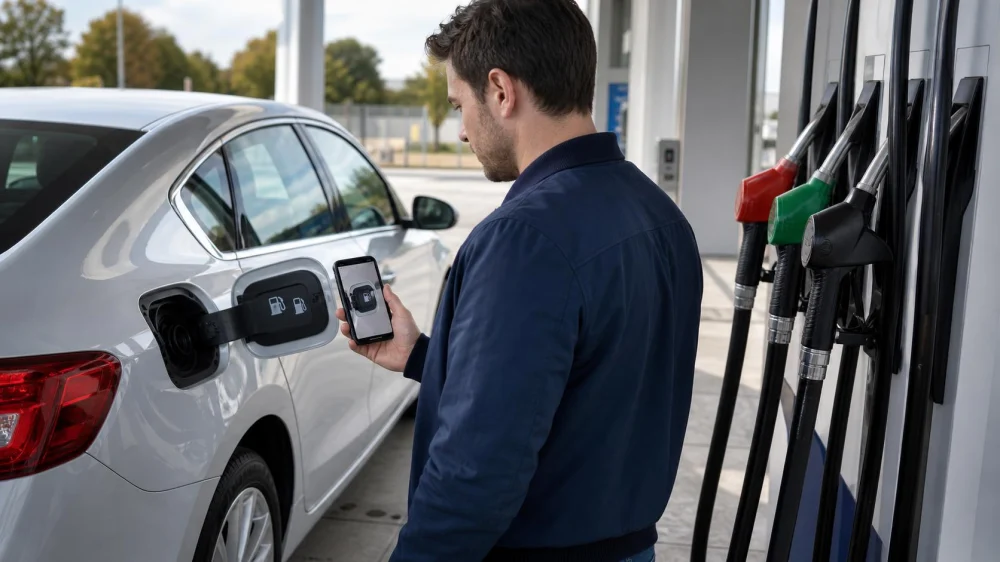
At pickup, open the fuel door while the vehicle is parked and look for a label such as gasoline, diesel, an octane value, or flex-fuel information. Compare it with the cap and owner’s manual or digital vehicle guide. Ask rental staff to resolve any conflict and document their answer. Do not rely solely on the reservation class because the assigned model can change.
Take a clear photo of the fuel-door label. This gives every authorized driver a quick reference at the pump. Also note which side of the vehicle has the fuel door; many instrument clusters show a small arrow beside the fuel-pump icon, but verify on the actual car.

National Car Rental
LouisvilleJefferson CountyKentucky
600 Terminal Dr Ste 8, Louisville, KY 40209, USA
Read the pump before selecting
Fuel-handle colors are not standardized enough to serve as the decision rule. Read the words and grade on the pump face, confirm the hose is connected to that selection, and compare it with the vehicle label before inserting the nozzle.
- Park, shut off the engine, and prohibit smoking or open flames.
- Open the fuel door and reread the vehicle’s fuel requirement.
- Read the pump’s full product label, including gasoline, diesel, E15, or E85.
- Select the required product and minimum octane grade.
- Pause before squeezing the handle and compare the vehicle and pump one final time.
- Keep the receipt and photograph the final pump display if useful for rental records.
If a pump label is damaged, unclear, or unfamiliar, do not guess. Ask the station attendant or use another clearly labeled dispenser.
Separate gasoline from diesel
Gasoline and diesel engines use different fuels and combustion systems. Putting either fuel into the wrong system can lead to breakdown and costly damage. Nozzle fit may reduce some mistakes, but it is not a substitute for reading labels.
Do not infer diesel from vehicle size, sound, or brand. Many sport-utility vehicles, vans, and trucks come in more than one powertrain. Likewise, do not assume every compact rental takes regular gasoline. Verify the specific vehicle each time it is exchanged.
Understand ethanol and octane choices
Octane grade and ethanol blend are different decisions. “Regular,” “midgrade,” and “premium” generally describe octane choices. E15 and E85 describe gasoline-ethanol blends. A higher octane number does not automatically make an incompatible ethanol blend acceptable.
The U.S. Environmental Protection Agency says E85 is for flexible-fuel vehicles specifically designed for it. Check the fuel door or owner’s manual for flex-fuel compatibility. E15 has its own compatibility rules, but the safest rental practice is to use only what the assigned vehicle and rental company identify as permitted.
If the vehicle says “premium recommended,” that may differ from “premium required.” Follow the exact manufacturer wording and rental instructions. Do not downgrade a required grade to save money, and do not assume a more expensive fuel produces a benefit when it is not specified.
What to do after choosing the wrong fuel
If you notice before fuel enters the tank, replace the nozzle and select the correct pump. If any wrong fuel entered, release the handle immediately. Do not turn the ignition on, press the start button, or attempt to “dilute” the tank with the correct fuel.
Tell station staff that the car cannot be started. From a safe place, call the rental company’s official roadside or emergency number and report the vehicle, location, fuel type, approximate amount, and whether the engine was started. Follow its towing and service authorization instructions. Contact emergency services for a spill, fire, injury, or immediate hazard.
Do not authorize draining, repairs, or towing from an unsolicited provider unless the rental company permits it or safety authorities direct it. Keep receipts, case numbers, and photographs. Responsibility and coverage depend on the rental agreement, insurance, waivers, and facts; do not assume a particular outcome.
Fueling checklist
- Photograph the fuel-door label at pickup.
- Confirm gasoline, diesel, flex fuel, or another specified energy source.
- Record the minimum octane and whether premium is required or recommended.
- Share the photo with every authorized driver.
- Read pump words and numbers instead of using handle color.
- Keep the engine off and stay with the nozzle.
- Keep a receipt that shows product, quantity, time, and station.
- If a mistake occurs, do not start the car; call the rental company.
Frequently asked questions
Can I identify fuel type from the VIN or license plate?
Those identifiers may support a model lookup, but configuration details and data can be incomplete. The fuel-door label, vehicle instructions, and rental company confirmation are more direct for the assigned car.
Is E85 the same as premium gasoline?
No. E85 is a high-ethanol fuel for compatible flexible-fuel vehicles. Premium is an octane grade of gasoline. Choose based on vehicle compatibility and the required grade, not price or pump position.
What if the fuel cap is missing?
Some vehicles use capless systems. Look for a label inside the fuel door and consult the vehicle guide. If parts appear damaged or instructions remain unclear, contact the rental location before fueling.
Should I start the car to move away from the pump after misfueling?
No. Starting can circulate the wrong fuel. Tell station staff, keep people safe, and ask the rental company how the disabled vehicle should be moved. Emergency conditions take priority over property concerns.
Sources and limitations
The EPA ethanol vehicle guide explains that E85 is for flexible-fuel vehicles and suggests checking the fuel door or owner’s manual. The EPA E85 overview further distinguishes the blend from standard gasoline.
This is general U.S. travel and safety information, not mechanical, legal, insurance, or contract advice. Fuel products, pump labels, vehicles, rental fleets, agreements, and state rules vary. The assigned vehicle’s current labeling and authorized rental guidance control.
Next steps
At pickup, photograph the fuel requirement and save the official roadside number. At every station, compare that photo with the full pump label before touching the handle. If anything conflicts, pause and ask. If the wrong fuel enters the tank, keep the engine off and contact the rental company immediately.




 Vegas Escalade Rentals5.0 (1 reviews)
 Avis Car Rental3.0 (141 reviews)
 Hertz Car Rental - Chicago - Chicago O'hare International Airport (ORD)3.0 (2655 reviews)
 Avis Car Rental4.0 (44 reviews)
 Enterprise Rent-A-Car4.0 (647 reviews)
 Alamo Rent A Car2.0 (33 reviews)
 Best Car Rental Options for Business Travelers in the US – Top Choices for Convenience and Comfort
 Best Car Rental Locations Near Major US Train Stations
 Understanding the Fine Print: Rental Car Contracts Explained Simply
 Rental Car Tire Check Guide: Inspect Before Driving
 How to Avoid Paying for Satellite Navigation or Tolls When Your Rental Car Should Include Them
 How to Find Cheap Car Rentals in Baltimore Washington Airport