
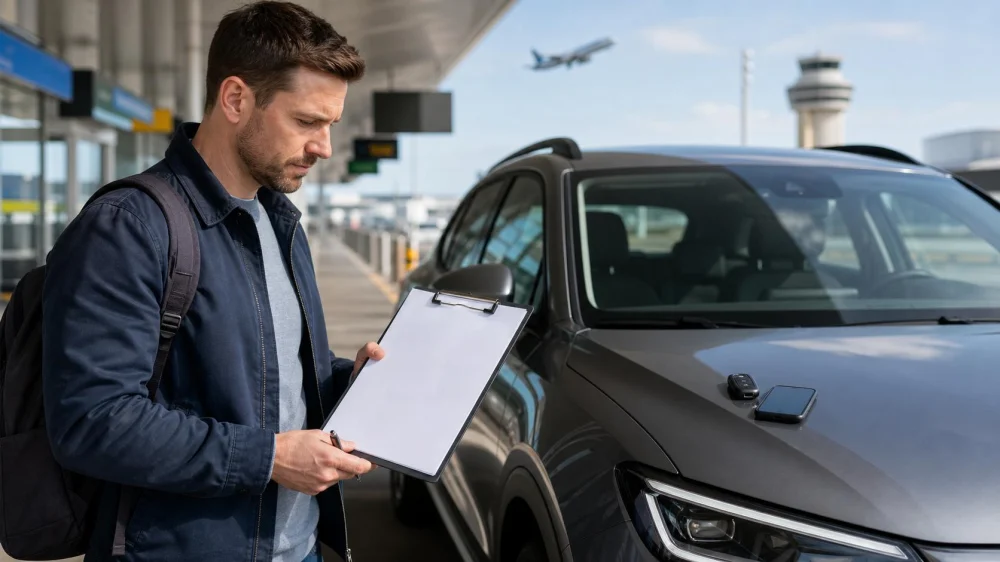
How to Review a Rental Car Agreement Before You Drive
On this page
Quick answer
Before leaving the rental counter, compare the final agreement with your reservation and verify the vehicle class, dates, locations, authorized drivers, mileage, fuel, tolls, optional products, taxes, fees, card hold, and return rules. Decline unwanted additions, obtain a completed copy, inspect the vehicle with an employee when possible, and document existing damage, fuel level, mileage, and dashboard warnings.
A rental car agreement is the contract that states who may drive, where and how the vehicle may be used, what charges apply, and each party's responsibilities.

Enterprise Rent-A-Car
YucaipaSan Bernardino CountyCalifornia
33081 Yucaipa Blvd, Yucaipa, CA 92399, USA
What the agreement controls
A reservation confirms requested terms, but the signed agreement at pickup is the document you must read. Do not assume a quoted base rate includes every required charge or that a loyalty profile automatically selected your current preferences.
Confirm the renter's name, pickup and return location, date and time, vehicle class, and every authorized driver. Ask the agent to explain abbreviations and point to the written term. Do not sign a blank or incomplete screen, and do not rely only on a verbal promise.

24/7-Enterprise Rental Car-ATL Airport
Concourse F, 6000 N Terminal Pkwy, Atlanta, GA 30320, USA
Verify the total price
- Rate: daily or weekly amount and what triggers another day.
- Taxes and facility charges: state, local, airport, licensing, or other listed mandatory amounts.
- Options: coverage products, roadside assistance, satellite radio, navigation, child seats, or other equipment.
- Drivers: additional-driver or age-related charges and any stated exceptions.
- Mileage: unlimited use or a limit, the measurement period, and excess-mile charge.
- Fuel: required return level, prepaid plan, or refueling method and rate.
- Tolls: enrollment, transponder activation, administrative fees, and charges on days without toll use.
- Card hold: the authorization amount and when the company expects to release it after return.
Compare the estimated total, not merely the headline rate. If an unwanted item appears, request removal and review the updated agreement before signing.
Confirm vehicle-use rules
Ask whether the planned states, roads, border crossings, ferries, or driving conditions are permitted. Confirm who may drive; allowing an unauthorized driver can violate the contract and affect a waiver or coverage. Review restrictions involving towing, off-road use, smoking, pets, rideshare or delivery work, and after-hours parking.
Verify the roadside procedure for a flat tire, warning light, dead battery, lost key, breakdown, or collision. Save the correct assistance number and rental location contact before leaving.
Review coverage and waivers
Rental companies may offer collision or loss damage waivers, liability products, personal accident coverage, and personal-effects coverage. A waiver is not necessarily the same as insurance, and exclusions can apply. Do not accept or decline based on a generic claim that a credit card or personal policy “always covers rentals.”
Before pickup, ask your insurer, card issuer, employer, or travel policy administrator what is covered, where, for which vehicle types and drivers, and whether you must pay with a particular card or decline the rental company's product. Ask about deductibles, loss of use, diminished value, towing, administrative fees, and claim procedure. Keep written benefit terms.
Complete the pickup inspection
- Walk around the vehicle in adequate light and compare damage with the checkout record.
- Photograph or video every side, wheels, glass, roof when safely visible, interior, fuel gauge, odometer, and dashboard.
- Report scratches, dents, stains, odors, missing equipment, warning lights, tire concerns, and windshield damage before departure.
- Ask an employee to add unrecorded damage and retain confirmation.
- Check lights, mirrors, seat belts, wipers, controls, and child-seat installation where applicable.
Do not drive a vehicle you reasonably believe is unsafe. Request inspection or another vehicle and preserve the communication.
Plan the return before leaving
Save the exact return address, entrance instructions, deadline, grace-period terms, fuel requirement, and after-hours process. Identify a reasonable fuel stop if you must refill, but verify opening hours later. Keep the fuel receipt and take time-stamped return photos of vehicle condition, dashboard, mileage, fuel, parking location, and key drop.
Ask how early or late returns affect the rate and optional daily charges. If plans change, contact the company and obtain written confirmation rather than assuming the reservation automatically updates.
Five-minute counter checklist
- Final total matches the intended booking
- No unwanted option or driver appears
- Mileage, fuel, toll, geographic, and return terms are clear
- Coverage decision is informed and documented
- Card hold will not disrupt available credit or bank funds
- Existing damage and fuel are recorded
- Roadside and accident instructions are saved
- A complete agreement and condition record are in your possession
Important limits
This is general consumer information, not legal or insurance advice. Contract terms, state law, company policies, card benefits, personal insurance, vehicle availability, and toll systems vary. Read the current documents for the exact rental and obtain professional advice for coverage or legal questions.
For a collision, prioritize safety, call emergency services when needed, follow local law, and use the rental company's reporting procedure. Do not admit or assign legal fault at the scene based on this guide.
Frequently asked questions
Why is the card hold higher than the estimated rental?
Companies may authorize extra funds for potential final charges. Ask for the exact hold, accepted payment type, and expected release process before signing.
Is prepaid fuel always cheaper?
No. It may buy convenience, but value depends on the price, amount used, refund rules, and return plan. Compare the written terms.
Can I add a driver later?
Policies vary. Contact the company and complete any required authorization before that person drives.
Should I connect my phone to the rental car?
Only if useful and after considering privacy. Before return, delete paired devices, contacts, messages, call history, destinations, and account access from the vehicle.
What if the final agreement differs from my reservation?
Pause before signing. Show the confirmation, ask for correction or explanation, and decide based on the completed written terms.
Sources and evidence notes
The U.S. Federal Trade Commission advises comparing total rental cost, reviewing taxes and fees, understanding fuel, mileage, toll, driver, drop-off and card-hold terms, and checking existing coverage before buying optional products in its rental car consumer guide. The FTC also notes that connected vehicles may retain phone and destination data, supporting deletion before return.
Conclusion and next steps
Turn the checklist into a note on your phone and compare at least two complete quotes before booking. Use LifeStar Car Rental to explore providers, then verify all terms directly with the selected company. At pickup, slow down long enough to make the signed agreement, vehicle condition, and return plan unambiguous.




 Thrifty Car Rental2.0 (160 reviews)
 Enterprise Rent-A-Car4.0 (278 reviews)
 Enterprise Rent-A-Car4.0 (2394 reviews)
 Alamo Rent A Car4.0 (159 reviews)
 Fox Car Rental1.0 (16 reviews)
 Enterprise Rent-A-Car4.0 (169 reviews)
 Car Rental Policies for Cross-Border Travel to Mexico
 How to Navigate Rental Car Fuel Policies When Driving Long Distances | LifeStar Car Rental
 How to Avoid Paying for Add-Ons You Don’t Need: Child Seats, Extras & Navigation
 Renting a Car for a Cross-Country Road Trip
 How to Choose a Rental Car Company That Offers Free Drop-Off at the Airport
 How to Choose the Best Rental Car for a Luxury Getaway Without Breaking Your Budget