
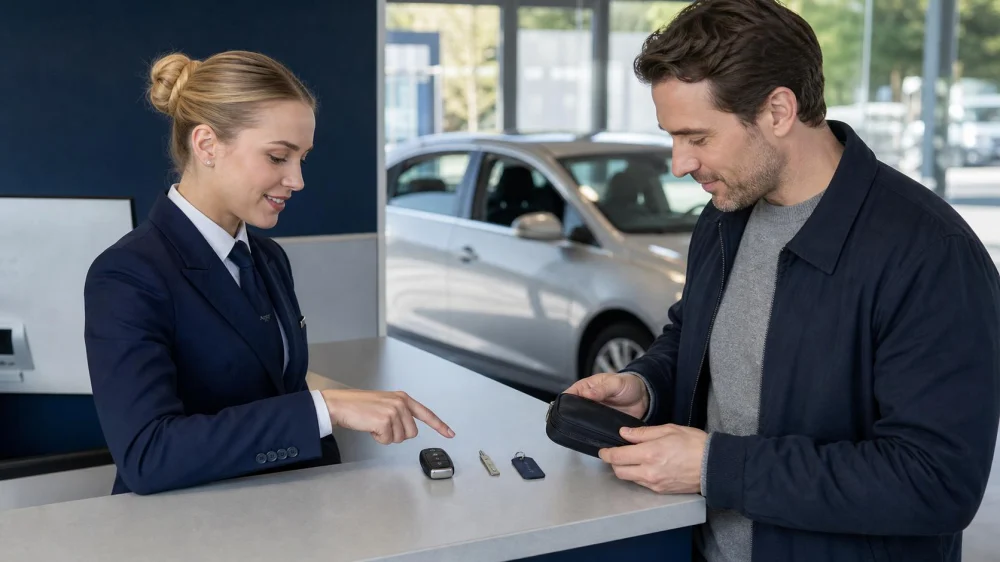
Rental Car Key Handoff: Count, Protect, and Report Loss
A rental-car key is often an electronic fob, emergency blade, and tagged identifier in one expensive package. The safest routine begins at the counter: count every key and accessory, learn the approved backup and lockout procedure, keep the fob dry and separate from luggage, and report a missing or damaged key immediately. Do not cut, program, pry open, or replace rental hardware on your own.
Quick answer
Before leaving, confirm how many keys, fobs, removable blades, and tags you received. Test lock, unlock, trunk, and starting while parked. Save the rental branch and roadside-assistance contacts offline. Use a secure pocket or zipped compartment, never checked luggage or an unattended beach bag. For loss, lockout, water exposure, low-battery warning, or damage, call the rental company and follow its authorized process.

Inspect at pickup
Count the physical items in front of the representative and compare them with the agreement. Some providers attach two fobs together; that can mean both are at risk at once and may create a larger replacement charge. Do not separate a sealed or provider-attached set without permission.
Photograph existing cracks, missing buttons, loose blades, damaged rings, and worn tags. Ask the representative to record the condition. Confirm whether the tag contains vehicle location or return information that should stay attached.

Learn key functions
While the vehicle is safely parked, identify lock, unlock, trunk or hatch, panic button, remote start if enabled, and the normal start procedure. Locate the emergency mechanical blade only through the owner manual or staff explanation; do not remove covers by force.
Ask what to do if the fob battery is weak and where the approved start sensor is located. Features differ by model. A video for a similar year can be wrong, so rely on the vehicle manual and rental provider.
Carry it securely
Choose one consistent zipped pocket or small pouch on your person. Keep the key separate from passports, wallet, phone, and all travel documents so one loss does not compromise everything. Avoid putting it loose in a shopping bag, cup holder, stroller, or coat left at a venue.
Never leave the key inside the vehicle, even briefly. Confirm it is in hand before closing the trunk or hatch, especially when loading. Passive-entry systems can behave differently when a fob is near metal luggage, another fob, or a depleted battery.
Protect electronics
Electronic fobs can be damaged by pools, ocean water, rain, heat, sand, crushing, and laundry machines. Use a protective dry pouch when appropriate, but do not assume a thin plastic bag is waterproof. Keep the key out of direct sun and off hot dashboards.
If the fob becomes wet, do not press buttons, heat it, open it, or insert it into a charger. Move it to a dry safe place and contact the rental provider for instructions. Saltwater and battery damage need prompt professional handling.
Handle a lockout
Move to a safe public location and check every door and the hatch once without forcing anything. Confirm the key is not in a pocket or bag. Call the number in the agreement, rental app, branch record, or approved roadside plan.
Do not use coat hangers, wedges, slim tools, copied keys, online bypass instructions, or an unapproved locksmith. These can damage airbags, wiring, glass, seals, and locks and may violate the contract. Call emergency services when a child, vulnerable person, or animal is trapped or another immediate danger exists.
Report a lost key
Tell the provider when and where the key was last seen, whether identifying tags remain attached, and whether theft is suspected. Follow instructions about securing the vehicle, filing a police or venue report, waiting for roadside assistance, and arranging a replacement vehicle.
Do not post the key tag or vehicle location publicly. If the key was taken with a bag containing the agreement or address, explain the combined exposure. Save case numbers, names, times, receipts, and written instructions.
Report damage or warnings
For a cracked shell, loose key blade, unresponsive button, intermittent start, or low-fob-battery warning, park safely and contact the provider. Use only the approved backup start process. Do not buy a coin cell and replace it unless the rental company explicitly authorizes that exact step.
Take clear photos without displaying sensitive codes. Request written confirmation of whether to continue driving, exchange the vehicle, or wait for help. A working mechanical key does not guarantee the immobilizer will start the car.
Return and document
At return, remove personal key rings and present every rental key, fob, blade, and tag. Ask the representative to confirm receipt and note any previously reported issue. If using after-hours drop, follow the exact secured process and photograph the sealed drop location without exposing keys.
Keep the final receipt, condition record, and key-related case number until charges are settled. Dispute an unexpected fee through the rental provider’s documented process with your pickup and return evidence.
Frequently asked questions
Can I separate two attached rental keys?
Ask first. Provider seals and attachments may be part of the inventory.
Can any locksmith make a replacement?
Use only the rental company’s authorized process; modern keys may require secure programming.
Should the key go in checked luggage?
No. Keep it securely on your person while the vehicle remains in your responsibility.
What if a pet or child is locked inside?
Call emergency services immediately and then notify the rental provider.
Next steps
At pickup, count and test the key set, save assistance contacts, choose a secure carry location, and confirm lockout and loss procedures. At every stop, check the key before closing the last door. Report problems promptly and retain the case record through final billing.




 Art Med Trans, Inc.3.0 (10 reviews)
 STREET EXOTICS0.0 (0 reviews)
 GVC II3.0 (66 reviews)
 MNJ Medical Transportation4.0 (92 reviews)
 Go Rentals1.0 (4 reviews)
 Avis Car Rental2.0 (99 reviews)
 Why Some Cars Are Restricted From Interstate Travel in the U.S.
 Hidden Fees You Should Know Before Booking a Rental Car
 How to Find Cheap Car Rentals in Tampa International Airport
 Rental Car Key Handoff: Count, Protect, and Report Loss
 Top Mistakes First-Time U.S. Car Renters Make — And How to Avoid Them
 How Much Is the Security Deposit for a Rental Car in the US?